
Explore Our Orchid Tissue Culture Laboratory in Thailand
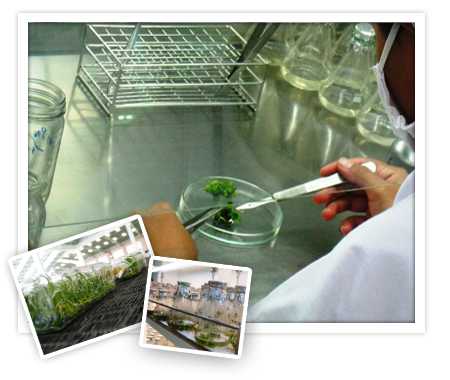
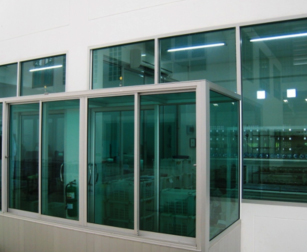
BB Orchids operates a fully equipped orchid tissue culture laboratory in Thailand at our Pramote Orchid Farm (POF) in Nakhon Pathom. Established in 2010, this in-house facility gives us complete control over the propagation process, from selecting parent plants all the way through to producing flask-ready plantlets. For wholesale buyers, that translates into plants with consistent flower traits, strong genetics, and reliable batch quality, order after order.
Our Thai orchid tissue culture lab focuses primarily on our own Dendrobium and Cattleya hybrids, though we also propagate Oncidium, Vanda, and other genera as demand requires.
How Orchid Tissue Culture Works
Tissue culture is a propagation method that allows growers to produce large numbers of genetically identical plants from a small piece of living tissue. In the orchid industry, it is the standard for commercial-scale production because it delivers uniformity and eliminates the unpredictability that comes with seed-grown plants.
Here is a simplified look at the process used in our lab:
- Tissue selection: A tiny section of meristematic tissue (actively growing cells) is taken from a carefully chosen parent plant. Think of it like taking a cutting, but on a microscopic scale. Instead of snipping a branch, our technicians extract a piece smaller than a pinhead from the orchid’s newest growth point.
- Sterilization: The tissue sample is disinfected and placed onto a nutrient-rich growing medium inside a sealed, sterile flask. This step is similar to placing a seed in perfectly prepared soil, except the “soil” is a jelly-like formula packed with minerals, sugars, and vitamins, and the container is completely sealed to keep out bacteria and fungi.
- Multiplication: Under controlled temperature and lighting, the tissue develops into protocorm-like bodies (PLBs), which are then divided and transferred to fresh medium multiple times to increase volume. In simple terms, the tiny tissue piece grows into a small cluster of cells. Our team then splits that cluster into several pieces, each of which grows into its own cluster. This splitting and regrowing cycle is repeated until we have enough material to produce a full batch of plants.
- Plantlet development: Once enough PLBs have formed, they are allowed to develop roots and leaves, becoming small individual plantlets inside the flask. At this stage, what was once a microscopic tissue sample now looks like a miniature orchid, complete with tiny roots and green leaves, all growing inside a glass bottle.
- Deflasking and hardening: Plantlets are removed from flasks and gradually acclimatized to open-air growing conditions in our nursery before being potted on as seedlings. This is the transition from lab to farm. The young plants have spent their entire life in a sealed, humid environment, so they need a gradual introduction to natural air, sunlight, and regular watering before they are strong enough to grow independently.
The entire cycle, from initial tissue extraction to a deflasked plantlet, typically takes 12 to 18 months depending on the orchid genus.
What We Produce
Our lab handles two main types of propagation:
- Mericlones: Exact genetic copies of a selected parent plant. Every mericlone inherits the same flower color, shape, size, and growth habit as the original. This is the method we use for proven commercial hybrids where trait consistency is critical for wholesale buyers.
- Seed cultures: Orchid seeds are germinated in vitro on nutrient media inside sealed flasks. Seed-grown plants carry genetic variation, making this the method of choice when developing new hybrids or expanding genetic diversity.
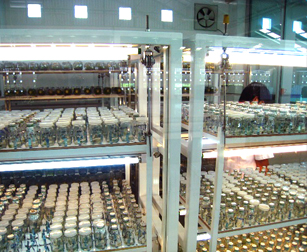
BB Orchids produces plants in 750cc glass flasks, with approximately 40 to 45 plantlets per flask depending on the genus and growth stage. From there, plants move through our nursery pipeline into seedling, blooming, and flowering sizes before they are cleared for export.
How We Select Parent Plants
Not every orchid makes it into our propagation program. Our team evaluates potential master plants against a specific set of criteria before any tissue is taken:
- Strong, vivid flower color with minimal fading
- Good flower count and consistent bloom size
- Free-flowering habit (plants that bloom reliably and repeatedly)
- Vigorous root and pseudobulb development
- Ease of growth under standard nursery conditions
- Resilience during packing and international transit
Only varieties that pass all of these benchmarks are approved for tissue culture growing for Thai orchid production. This strict selection process is what allows us to maintain the quality standards that wholesale buyers depend on.
Why An In-House Lab Matters for Wholesale Buyers
Running our own orchid plant tissue culture facility in Thailand rather than outsourcing propagation has real advantages for the businesses we supply:
- Batch consistency: Every plant in a batch comes from the same tissue source, so flower traits and growth habits are uniform across your order
- Supply reliability: Because we control the full production timeline, we can plan flask output months in advance and align it with your ordering schedule
- Quality traceability: We track each flask from tissue extraction through to deflasking, so any quality concern can be traced back to source
- Proprietary varieties: Our in-house hybrids are developed and propagated exclusively at our tissue culture lab in Thailand, giving your business access to plants that are not available through other suppliers
- Cost efficiency: No third-party lab fees means more competitive wholesale pricing passed on to you
Talk to Our Lab Team
Have questions about flask availability, lead times, or custom propagation? Our team can walk you through the options and help you find the right fit for your business. Get in touch:
- Email: info@bborchids.com
- WhatsApp: +66 81 199 9157
- Facebook:facebook.com/bborchids
An Expanding Growing Area And Established Laboratory
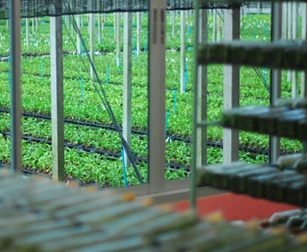
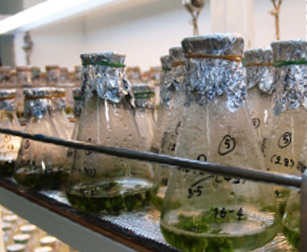
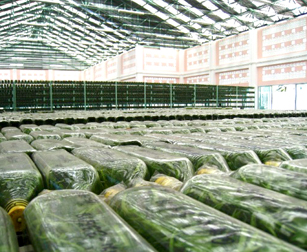
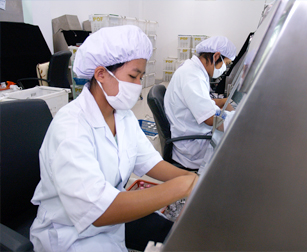
BB Orchid’s High-tech Facilities And Highly-experienced Team
Frequently Asked Questions
Q: What orchid genera does the BB Orchids lab propagate?
A: Our lab primarily produces Dendrobium and Cattleya hybrids, which make up the majority of our catalog. We also propagate Oncidium, Vanda, Phalaenopsis, and other genera based on seasonal demand and buyer requests.
Q: Can I order orchid flasks directly from the lab?
A: Yes. We sell flask plantlets as a standalone product. Each 750cc flask contains roughly 40 to 45 plantlets. Flasks are a cost-effective option for nurseries and growers who have the facilities to deflask and grow plants on-site. Browse ourflask collection here.
Q: How do mericlones differ from seed-grown orchids?
A: Mericlones are genetically identical to the parent plant, so every plant in the batch will produce the same flowers. Seed-grown orchids carry natural genetic variation, meaning flower color, size, and form can differ from plant to plant. Mericlones are preferred when uniformity is important for retail or commercial display.
Q: What is the typical lead time from flask to blooming-size plant?
A: It varies by genus. Dendrobium hybrids generally reach blooming size in 18 to 24 months after deflasking. Cattleya and Oncidium varieties tend to take longer, often 24 to 36 months. If you need blooming-size stock sooner, we carry ready-to-ship mature plants alongside our flask inventory.
Q: Does BB Orchids develop its own orchid hybrids?
A: Yes. We breed and select new hybrids in-house. Only crosses that demonstrate strong flower quality, vigorous growth, and free-flowering characteristics are approved for mass propagation. This means many of the varieties in our catalog are proprietary to BB Orchids and not widely available elsewhere.
Q: How are flasks packed for international shipping?
A: Flasks are individually cushioned and packed in reinforced cartons designed to prevent breakage and temperature fluctuation during transit. Each shipment includes phytosanitary certification, and all required export documentation. We recommend buyers inspect flasks upon arrival and begin the deflasking process within a few days of delivery.