
Blog
Practical and Stylish Ideas for Hanging Vanda Orchids
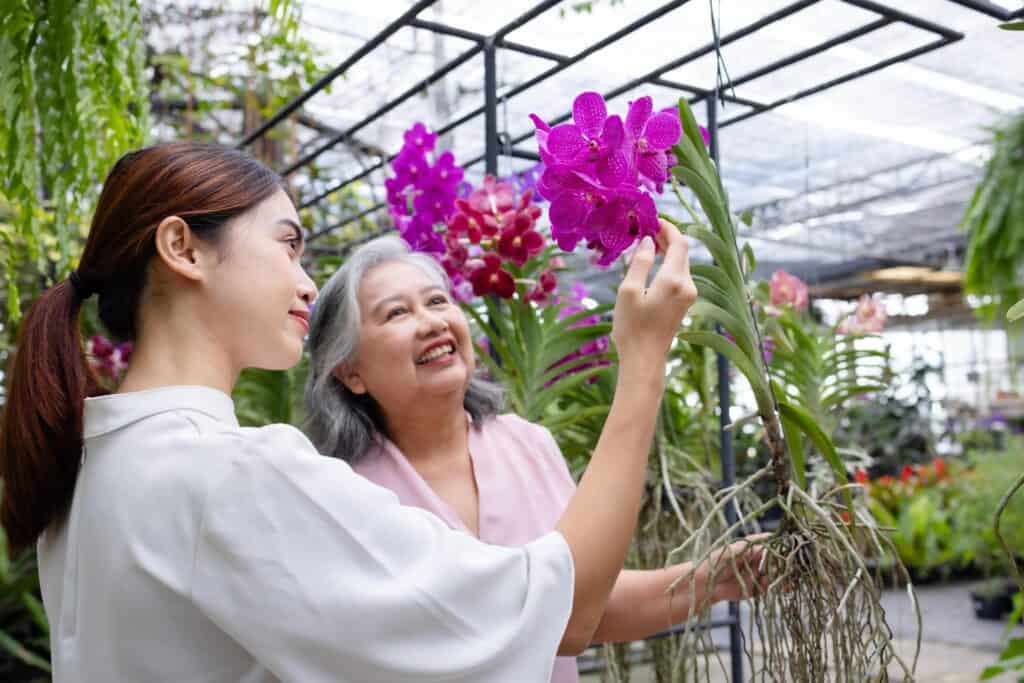
Jun
Key Takeaways
- Vanda orchids are epiphytes that need their aerial roots left fully exposed, which is why hanging Vanda orchids correctly protects root health and plant survival after import.
- Baskets, hooks, mounted driftwood, and wall frames each suit different nursery and retail needs, and the right Vanda orchid hanging ideas depend on your growing setup and available space.
- Weight-rated supports, exposed roots, and consistent airflow matter more to plant survival than which specific display method you choose.
- For nurseries sourcing consistent, well-rooted stock, BB Orchids provides professional guidance on Vanda orchid display methods and high-quality stock direct from our Thailand growing facilities.
The Vanda orchids’ vibrant blooms and exposed aerial roots make them a beautiful addition to indoor and outdoor spaces. If you’re exploring unique ways to display them, BB Orchids, a trusted Vanda orchid farm in Thailand, will share practical and stylish ideas on how to hang Vanda orchids so they thrive.
What Makes Vanda Orchids Popular Hanging Plants
Vanda orchids are known for their bold colors, long-lasting blooms, and exposed roots—unlike many orchids, they don’t need to be placed in pots. Vanda orchids have a distinct sculptural aesthetic, which is ideal for hanging ornamental plants.
Vanda orchids are epiphytes. With sturdy central stems, strappy leaves growing upward, and long roots trailing down, Vanda orchids naturally grow attached to trees in the wild. Their aerial roots absorb moisture and nutrients from the air, so hanging them is how they grow best to recreate their natural growing conditions.
Hanging Vanda orchids provide better air circulation that promotes healthy root growth. They love bright, indirect sunlight, so suspending them gives them better access to light at multiple angles. This promotes more frequent and vibrant blooming cycles.
How to Hang a Vanda Orchid: Step-by-Step
Step 1: Choose a weight-rated support
Pick a hook, bracket, or basket rated for the plant’s full weight once roots and growths mature, not just its current size. Undersized hardware is one of the most common causes of a support failing months later.
Step 2: Inspect and trim the roots
Before hanging, check every root for soft, mushy, or dead tissue and trim it back to healthy growth with a sterilized blade. Starting with clean roots gives the plant a better chance of adjusting well to its new support.
Step 3: Position the plant in the support
Set the base of the plant into the basket, hook, or mount so the crown stays upright and the roots hang freely without pressing against the container or wall.
Step 4: Secure it without restricting root movement
Attach ties or wire around the stem or base only, never around the aerial roots, and confirm the fastening can bear the plant’s weight as it continues to grow.
Step 5: Place it for light and airflow
Hang the plant where it gets bright, indirect light and steady air movement, away from direct midday sun and closed corners with stagnant air.
Step 6: Start the soak-and-dry watering routine
Begin watering on the soak-and-dry schedule covered later in this guide, and check root color weekly to confirm the plant is settling into its new support.
Vanda Orchid Hanging Ideas
These Vanda orchid hanging ideas are functional and suitable for any space:
Traditional Wooden or Wire Baskets
Baskets give a charming, classic look, great for balconies, patios, and open garden spaces. They provide plenty of airflow, so Vanda roots can grow through the gaps. Watering them is also easy, as the basket allows water to drain fully.
Hanging Hooks
For a more minimal approach, hang your Vanda orchid directly by its base using a strong hook. This allows the plant’s roots to expand and grow freely. It works well indoors in tight spaces, making them easier to move and clean.
Macramé Hangers
Use a breathable macramé hanger for your Vanda orchid to add a homey touch to your indoor decor. Place the hanger near windows or terraces with bright, indirect light.
Driftwood or Tree Branches
Mount Vandas on driftwood or tree branches with soft garden ties or clear fishing lines to replicate how they grow in nature. Place them outdoors in a shaded area or under a pergola where they can get just enough light and humidity.
Vertical Wall or Hanging Frames
Display your Vanda orchids on a vertical wall or suspended hanging frames to add striking visual interest. Hang them at different heights for a dynamic effect.
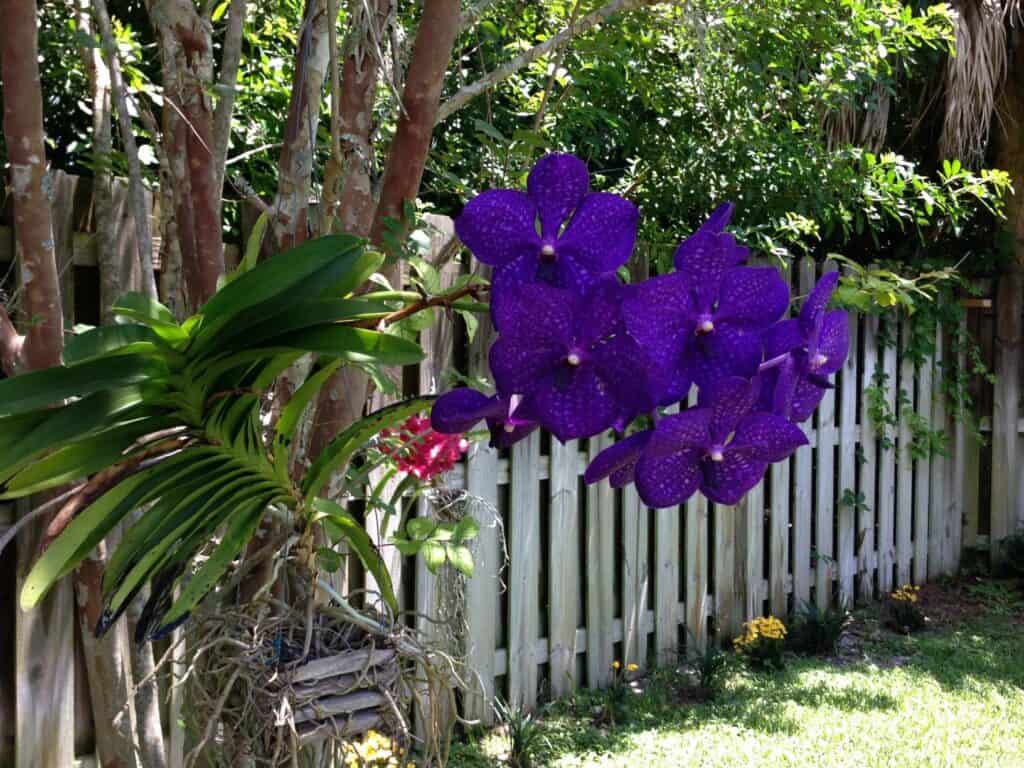
Care After Hanging: What Vanda Orchids Need to Thrive
Once you’ve decided on how to hang your Vanda orchids, here are some care tips to keep in mind to help your plants thrive:
- Use secure and stable fixtures: Double-check that the hooks and brackets you use can handle the weight of the plants.
- Provide the proper amount of light: Vanda orchids prefer bright yet indirect light, so avoid exposing them to harsh midday sun. Instead, aim for morning or filtered light.
- Display with high humidity: Use a humidifier indoors to maintain around 50-70% humidity, or hang your plants near water when outdoors.
- Follow the soak-and-dry method: To water Vanda orchids properly, submerge the roots in water for 10 to 15 minutes and allow them to drain completely, two to three times a week. Make sure the roots dry out between waterings.
- Fertilize weekly during the growing season: To fertilize Vanda orchids, use a balanced fertilizer, like 20-20-20, diluted to half or quarter strength.
Choose BB Orchids for Your Vanda Orchid Needs
As a leading orchid nursery in Thailand, we supply and export premium Vanda orchids grown with care, precision, and expertise. We specialize in cultivating vibrant, high-quality Vanda varieties with advanced facilities, a high-tech laboratory, and a highly experienced team to ensure consistent and healthy growth, from seedling to blooming and flowering.
We offer global shipping and cater to collectors and businesses worldwide. Browse our wide selection of Vanda orchids for wholesale and contact us for more information and guidance on hanging Vanda orchids.
Frequently Asked Questions About Hanging Vanda Orchids
Q: How do you hang a Vanda orchid?
A: Support the plant’s full weight with a hook, bracket, or basket rated for its size, leave the aerial roots fully exposed rather than potting or wrapping them, and position it in bright, indirect light with good airflow. Most growers use baskets for growing rows and hooks or mounts for individual display plants.
Q: What is the best way to display Vanda orchids?
A: The best method depends on the setting. Wire or wooden baskets suit growing rows because they combine airflow with a stable, uniform height. Hanging hooks work well where space is limited, and mounted driftwood or wall frames suit retail displays where buyers want to see the plant’s natural form.
Q: Can Vanda orchids grow without soil in a hanging basket?
A: Yes. Vanda orchids are epiphytes and grow without soil in nature, absorbing moisture and nutrients through exposed aerial roots. A basket, hook, or mount that leaves the roots open to air is the correct setup.
Q: How often should hanging Vanda orchids be watered?
A: Most growers use the soak-and-dry method, submerging roots for 10 to 15 minutes two to three times a week, then letting them drain fully. The exact frequency depends on local humidity and temperature, so check root color rather than following a fixed schedule.