
Blog
Caring for Cattleya Orchids From Arrival to Bloom
Aug
Key Takeaways
- Cattleyas are epiphytes with pseudobulbs and thick fleshy roots, so they want a porous, free-draining mix, not potting soil.
- Mature plants generally like a 15 to 20°F (8 to 11°C) gap between day and night, and dark green limp leaves usually mean too little light.
- Bring newly arrived plants into brighter light slowly instead of moving them straight into strong sun, which scorches the leaves.
- The best time to repot is when new roots or shoots are just starting to grow.
- Plants settle in easier when they arrive well prepped.
- BB Orchids is an experienced Cattleya orchid Thailand supplier that ships at flask, seedling, blooming, and flowering sizes.
A bare-root Cattleya that has endured five days in a shipping box may look nothing like the beautiful color blooms you’d expect. Instead, you may find leathery roots, no medium, with leaves a bit dull. That’s normal. What you do over the next couple of weeks determines how your Cattleya settles in.
Our guide explains how to care for Cattleya orchids the right way the first few weeks after you receive your shipment and over the consecutive months, so the plant gets to reach its full potential.
What Makes Cattleya Orchids Different
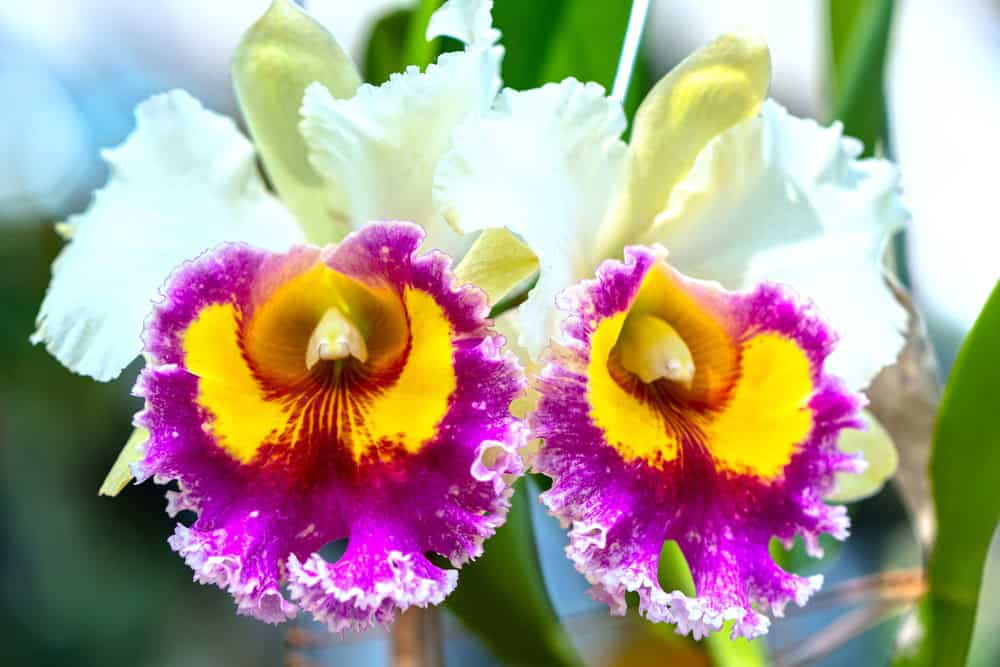
Cattleyas are epiphytic orchids that grow on tree branches in forest canopies, rather than in soil. Two key characteristics: water-storing pseudobulbs and thick, fleshy roots that require both air and moisture significantly influenced their care. This is why they are planted in a porous, well-draining medium such as fir bark, tree-fern fiber, coconut fiber, or a substrate composed of rocks.
They also grow sideways, spreading along a horizontal rhizome that pushes out new pseudobulbs one after another. That’s why a Cattleya slowly walks its way to the edge of the pot and eventually needs moving on.
What To Do Immediately After You Receive a Cattleya Shipment
Don’t try to do everything at once. The plant has just lost its root environment and needs time to settle.
- Inspect on arrival: Check the leaves, pseudobulbs, and roots for transit damage. Trim only the roots that are clearly dead or crushed, and leave the rest alone.
- Shade it first: Put plants in bright, indirect light and build up the exposure slowly. Move one straight into the hot sun and it’ll sunburn, showing as a yellow, tan, or white patch that then dries out.
- Go easy on water: Damaged roots don’t drink well, and roots kept soaking wet during this stage tend to rot. A light watering while new root tips appear is safer than a soak.
- Hold off repotting: Unless the roots are damaged or the packing material is unsuitable, wait until new growth shows. Give it a few days to settle before you change anything else.
How to Care for Cattleya Orchids
After your newly imported Cattleya has had time to settle in, here’s how to care for them throughout their lifetime:
Light
Cattleyas want bright light with some direct sun. Indoors, that means an east, west, or lightly shaded south window; in a greenhouse, roughly 30 to 50% of full sun. A healthy plant stands upright without much staking and shows a medium olive-green leaf color. Dark green, limp leaves mean it isn’t getting enough light, even if it looks lush.
Temperature
Mature plants generally want a 15 to 20°F (8 to 11°C) gap between night and day. They cope well with intermediate to warm conditions but won’t handle long spells down in the 50s and 60s Fahrenheit (roughly 10 to 20°C). The exact figures shift with the hybrid and your local climate, so treat these as starting points, not fixed rules.
Airflow
Air movement matters in a greenhouse, especially when it’s humid or cool, because stagnant, damp air is where fungal and bacterial problems start. Most orchids do well at around 40 to 70% daytime humidity.
Watering and Feeding
Allow the soil to dry out considerably before watering again, rather than sticking to a set schedule. The duration of that process is contingent upon your pot, the soil’s quality, atmospheric moisture, and the time of year, which is the reason a single watering regimen is not transferable between distinct environments. Here are a few key things to consider:
- Water temperature: Use lukewarm water. Water below 50°F (10°C) can injure the plant, and so can hard water or water softened with salt.
- Water from the top: Water from the top of the plant and let the pot drain fully before it goes back on the bench.
- Feeding while growing: A quarter to half strength dose applied regularly while the plant is actively growing, using a higher-nitrogen feed during that period.
- Feeding as growth slows: Ease off or stop as growth slows into autumn and winter.
- Nudging flowers: Some growers switch to a higher-phosphorus feed in spring to encourage flowering, though there’s some debate about how much it helps.
Potting
Repot when you first get the plant, when the rhizome grows out over the pot edge, or when the medium breaks down and stops draining, which is usually after two to three years. The best time is when new roots or shoots are just starting to grow.
- Trim carefully: Take off dead or damaged roots and leave the healthy ones.
- Position for growth: Set the oldest pseudobulbs against one side of the pot so the new lead has room to move across.
- Keep the rhizome level: Even if the pseudobulbs lean, the rhizome itself should sit flat, not buried or tilted.
- Match the medium: Mature Cattleyas usually go in a coarser mix than seedlings, which want a finer grade.
- Secure but don’t bury: The plant should be firm enough not to wobble, since movement snaps new root tips.
Water sparingly after repotting, and resume your usual care routine once new roots are visible within the growing medium.
Reasons Why an Imported Plant Won’t Flower
This is the most common challenge after a first import. It’s usually caused by one of five reasons:
- Plant stress: The shipping process can stress the plant, pushing flowering back by a growing cycle or more.
- Not enough light: Deep green leaves on a plant that grows fine but never blooms is the classic tell.
- Too much nitrogen: Heavy feeding through the rest period pushes leaves at the expense of flowers.
- Immature growth: A lot of Cattleyas only flower once the new pseudobulb has fully matured.
Common Mistakes While Caring for Cattleyas
Several avoidable mistakes cause most early plant losses:
- Overwatering, the most common one
- Repotting too often
- Using dense potting soil instead of an orchid mix
- Keeping plants somewhere too dark
- Expecting flowers within weeks of an import
Choosing a High Quality Supplier

How a plant is grown and prepped affects how well it settles in. When you’re enquiring with a Cattleya orchid Thailand supplier, ask whether they propagate on site, which growth stages they can supply, how plants are prepped and packed for air freight, and what export paperwork they handle.
Live plants generally require both an import permit and a phytosanitary certificate. For a full guide, read our related blog: Buy Cattleya Orchids Wholesale From Thailand: Full Guide.
H2: Sourcing Cattleyas from BB Orchids
BB Orchids is a specialist orchid grower in Thailand, running as Pramote Orchid Farm (POF) with facilities in Nakhon Pathom and Samut Sakorn. Cattleyas and Dendrobiums are our main focus, and we develop and select our own hybrids.
We perform mericlone and seed culturing within our facilities, and we provide plants at every stage of growth, from flasks to seedlings, blooming, and flowering sizes. Customers choose us because of:
- Carefully selected hybrids: Only hybrids that meet our own criteria go into production.
- Growth-stage choice: Order the stage that fits your timeline and growing space.
- Customized order support: Every order is built around what you actually need.
- Responsive service: Direct contact with our facility the whole way through.
Get in touch with BB Orchids to talk through Cattleya varieties, growth stages, and export requirements for your market. Browse our Cattleya range, check our Orchid Care Blog for more guides, or email ua at info@bborchids.com.
References:
- Cattleya Culture Sheet. Retrieved July 24, 2026, from https://www.aos.org/orchid-care/care-sheets/cattleya-culture-sheet
- Cattleya Culture – Part 3. Retrieved July 24, 2026, from https://www.aos.org/cattleya-culture-part-3
- Cattleya Culture Sheet. Retrieved July 24, 2026, from https://www.illinoisorchidsociety.org/resource-articles-all/cattleya-culture-sheet
- How To Buy Plants and Seeds Online. Retrieved July 24, 2026, from https://www.aphis.usda.gov/aphis/ourfocus/planthealth/import-information/permits/plants-and-plant-products-permits/plants-for-planting/buying-selling-plants-seeds-online/plants/required-documents
- Do I need a permit to import plants to US? Retrieved July 24, 2026, from https://blogs.ifas.ufl.edu/hendryco/?p=153
Frequently Asked Questions About Cattleya Orchid Care
Q: How do you care for Cattleya orchids after receiving them from Thailand?
A: Inspect the plant for transit damage and trim only clearly dead roots. Place it in bright indirect light and increase exposure gradually, since plants moved straight into hot sun develop sunburn patches. Water lightly rather than soaking while new roots recover, and hold off repotting until new growth appears unless the roots or packing material make it necessary.
Q: Why is my imported Cattleya orchid not blooming?
A: The usual causes are shipping stress delaying the flowering cycle, insufficient light, excess nitrogen during the resting period, or immature pseudobulbs that have not finished developing. Check light first: dark green limp foliage on an otherwise healthy plant is the clearest sign of under-lighting.
Q: How do you repot bare-root Cattleya orchids after shipping?
A: Repot when new roots or shoots are just starting to grow. Trim dead roots, set the oldest pseudobulbs against one side of the pot so the new lead has room to advance, and keep the rhizome level rather than buried. Use a coarse free-draining medium for mature plants and a finer grade for seedlings, then water lightly until new roots establish.
Q: How often should you water a Cattleya orchid?
A: There is no universal schedule. Allow the medium to approach dryness between waterings, with frequency depending on pot type, medium grade, humidity, and season. Use lukewarm water, because water below 50°F (10°C) can injure plants, as can hard water or water softened with sodium chloride.
Q: What should you ask a Cattleya orchid Thailand supplier before ordering?
A: Ask whether they propagate on site, which growth stages they supply, how plants are prepared and packed for air freight, and what export documentation they handle. Live plants generally require both an import permit and a phytosanitary certificate, and requirements differ by destination, so confirm current rules with your own plant protection authority.